

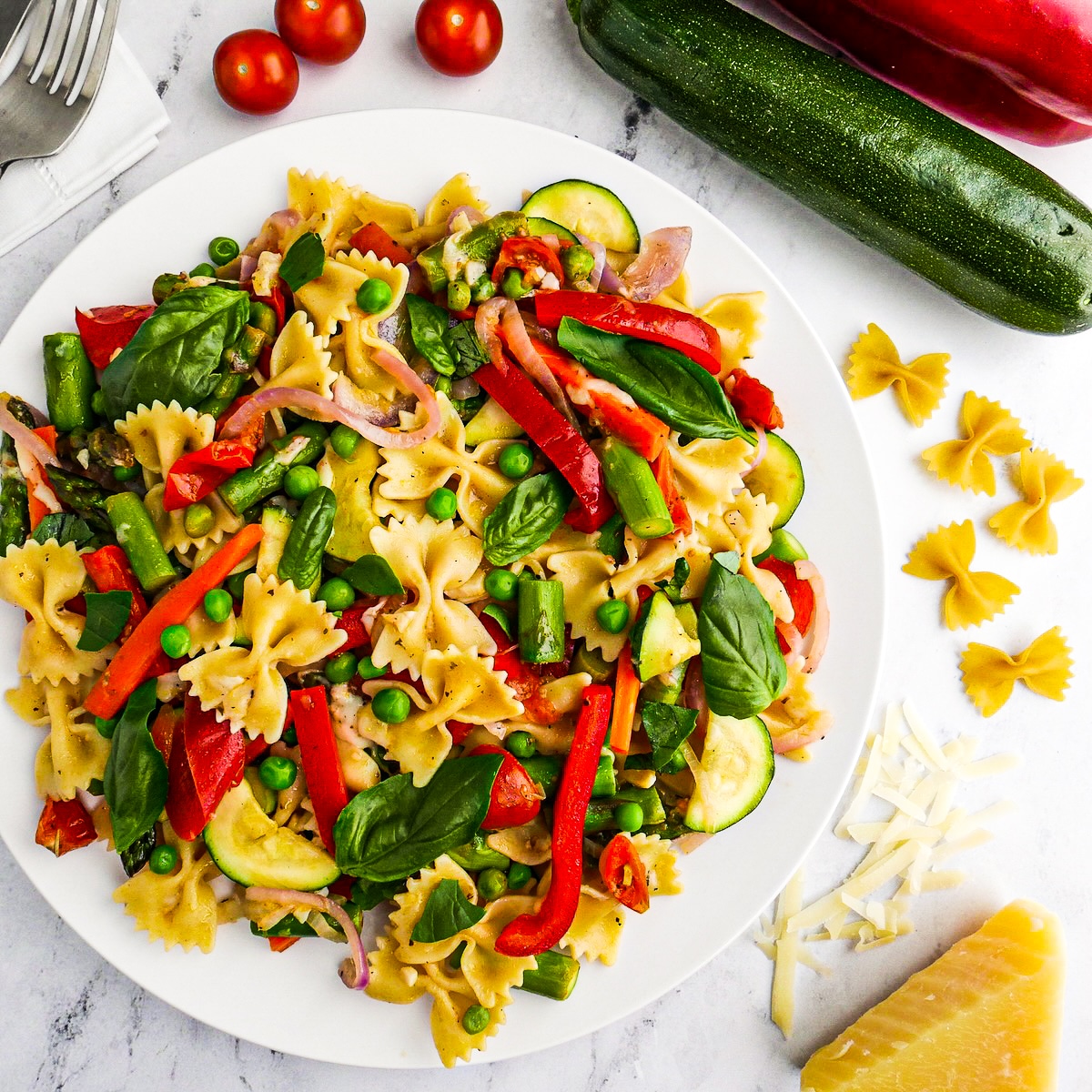
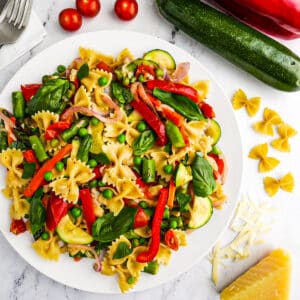
This easy pasta primavera recipe is packed with crisp-tender vegetables, fresh basil, lemon, and Parmesan in a light no-cream sauce. It's colorful, flexible, and ready in 30 minutes.
Want to save this recipe?
Enter your email below and get it sent straight to your inbox. Plus, I'll send you easy and delicious recipes every week!
This pasta primavera recipe is my lighter, weeknight-friendly take on the classic vegetable pasta - no heavy cream required. Instead, al dente pasta, crisp-tender vegetables, lemon juice, lemon zest, Parmesan, and a splash of starchy pasta water create a fresh, glossy sauce that clings to every bite.
The key is adding the vegetables in stages so the firmer vegetables have time to soften while the zucchini, tomatoes, and peas stay bright and tender. It's colorful, flexible, and ready in 30 minutes with whatever spring or summer vegetables you have on hand.
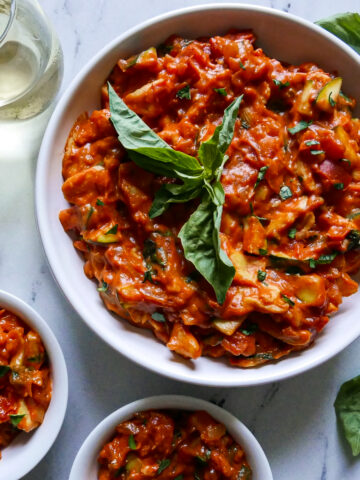
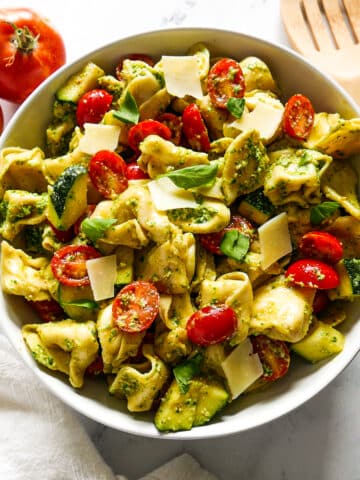
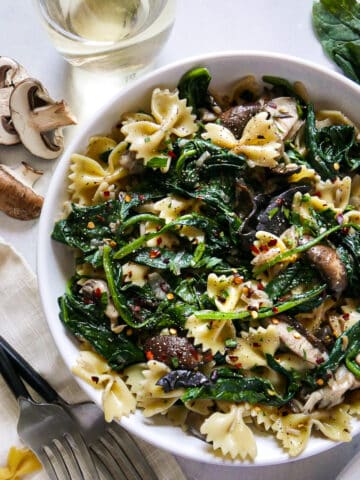
For more vegetable-forward pasta dishes, try my one pot pasta, garlic mushroom pasta, and vegetarian tortellini pasta salad!
Jump to:
⭐️ Why This No Cream Pasta Primavera Recipe is the Best
- Ready in 30 minutes: A fast vegetarian pasta dinner for busy weeknights.
- Light but flavorful: Lemon, garlic, basil, Parmesan, olive oil, and pasta water create a fresh sauce without heavy cream.
- Packed with vegetables: Asparagus, zucchini, peas, carrots, bell pepper, and tomatoes add color, texture, and sweetness.
- Easy to customize: Use your favorite seasonal vegetables or whatever you already have in the fridge.
- Great for leftovers: It reheats well with a splash of water or broth to loosen the sauce.
Best Vegetables for Pasta Primavera
Pasta primavera without cream works best with a mix of quick-cooking vegetables and firmer vegetables. I like using asparagus, carrots, bell pepper, zucchini, peas, and cherry tomatoes for color, texture, and sweetness. Cut everything into similar-sized pieces and add firmer vegetables to the pan first so nothing overcooks.
- Spring: asparagus, peas, carrots, sugar snap peas, spinach
- Summer: zucchini, yellow squash, bell peppers, cherry tomatoes, corn
- Year-round: broccoli, mushrooms, frozen peas, green beans
🫛 Ingredient Notes
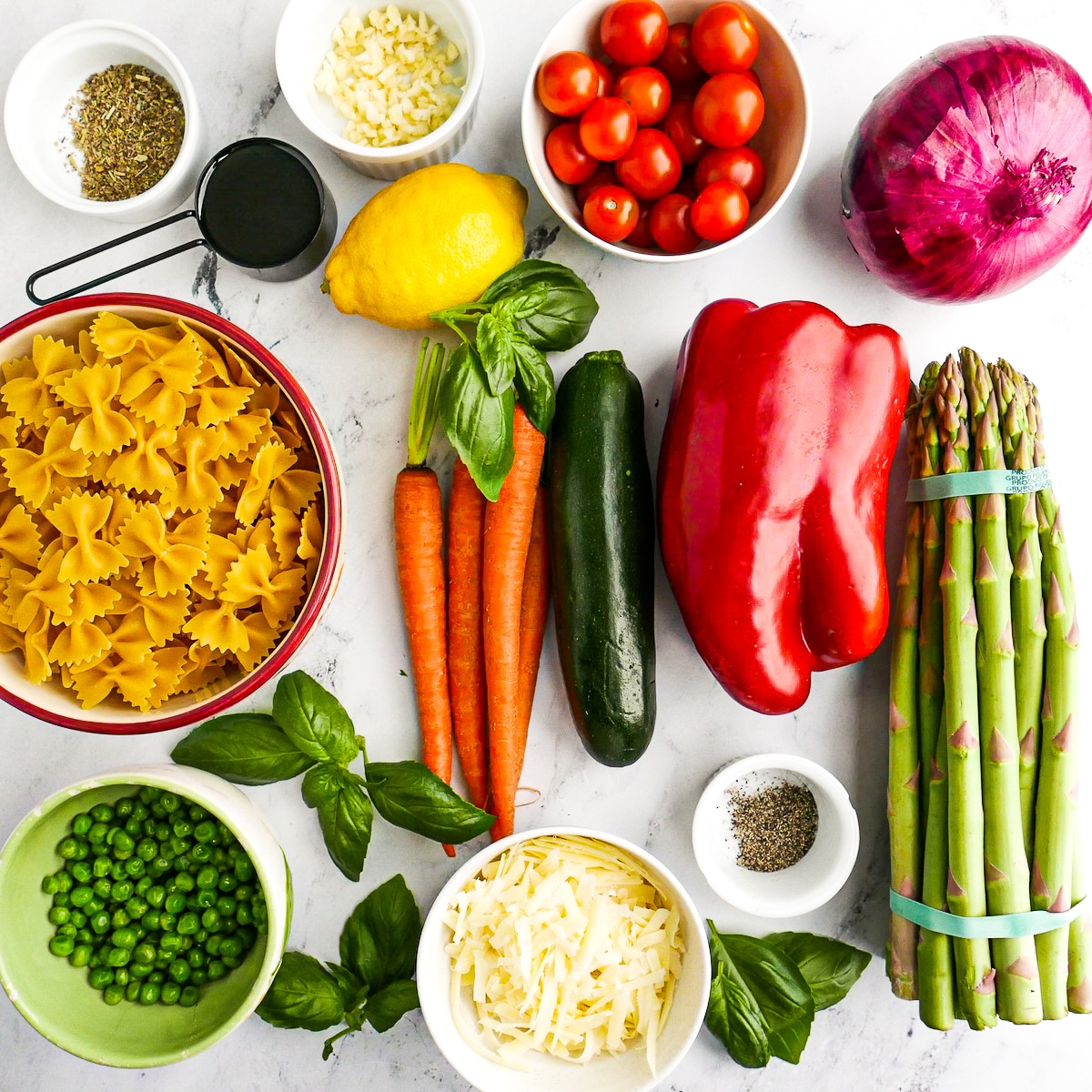
- Pasta - Short pasta like bow ties, penne, rigatoni, or orecchiette works best because it catches the vegetables and light sauce in every bite.
- Vegetables- I use zucchini, carrot, red bell pepper, asparagus, peas, and cherry tomatoes for a mix of color, texture, and sweetness. Fresh is best, but frozen vegetables work well in a pinch.
- Garlic - Fresh garlic gives the pasta a savory base. Slice or mince it finely so it blends into the sauce.
- Italian seasoning - Adds quick herb flavor. You can easily make your own Italian spice blend if you run out!
- Parmesan cheese - Freshly grated Parmesan melts better, and helps create a light, glossy sauce with the pasta water.
- Lemon - Use both zest and juice for brightness. The zest adds lemon flavor without extra acidity, while the juice balances the richness of the cheese and olive oil.
- Fresh basil - Stir it in at the end so it stays bright and fragrant. If you don't have fresh basil, use parsley or a smaller amount of dried basil, but fresh herbs give the best flavor.
📝 Variations & Add-Ins
- Change the vegetables: Use broccoli, mushrooms, spinach, snap peas, green beans, corn, yellow squash, or whatever seasonal vegetables you have on hand.
- Add vegetarian protein: Stir in white beans, chickpeas, crispy tofu, or toasted nuts.
- Make it vegan: Skip the Parmesan or use vegan Parmesan.
- Make it creamy: Add a splash of heavy cream, half-and-half, or a spoonful of cream cheese if you prefer a richer spring pasta.
🔪 How to Make Pasta Primavera
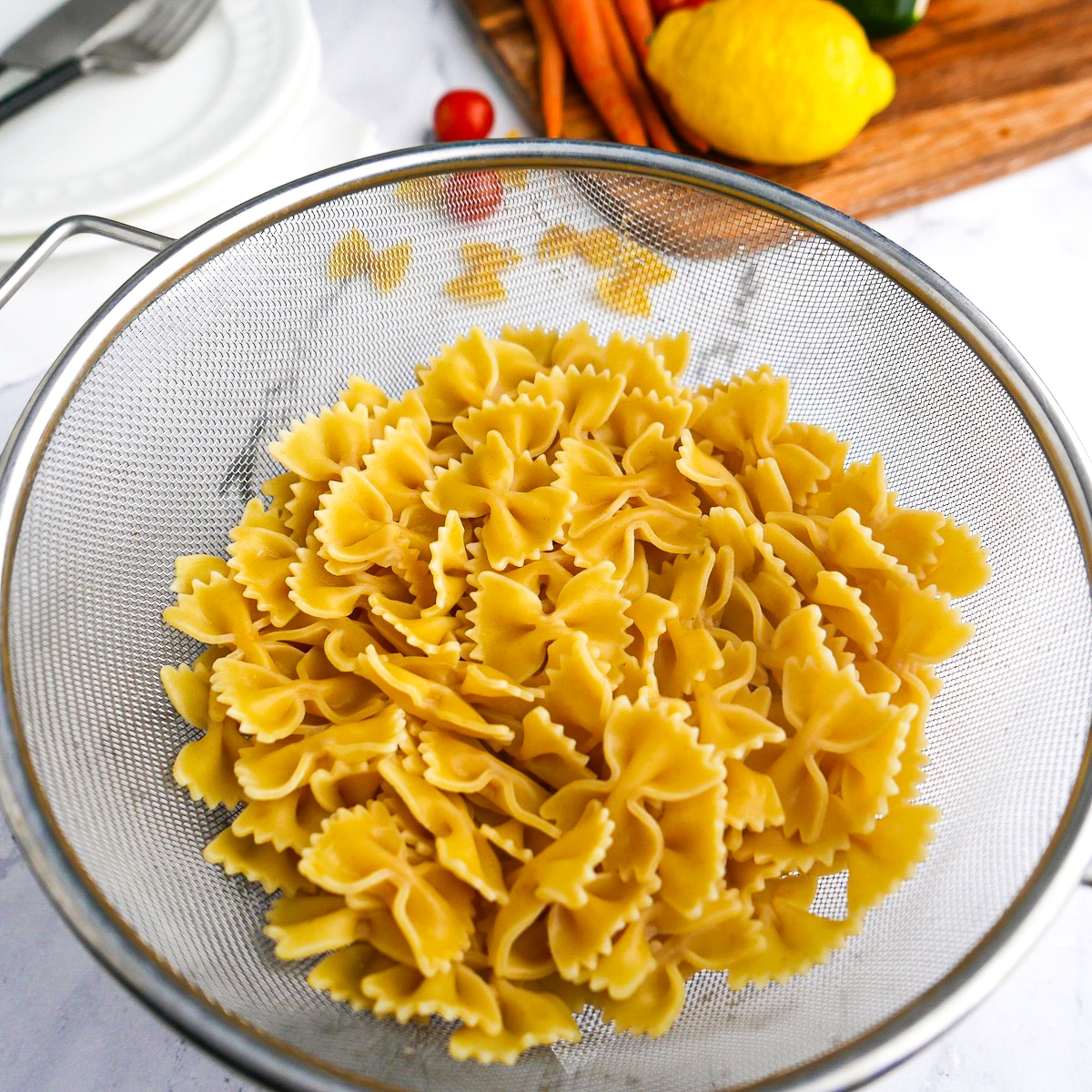
Over high heat, bring a large pot of water to a boil, and add a large pinch of salt. Cook pasta according to (al dente) package instructions. After pasta is cooked, set aside ½ cup of pasta water and drain the pasta.
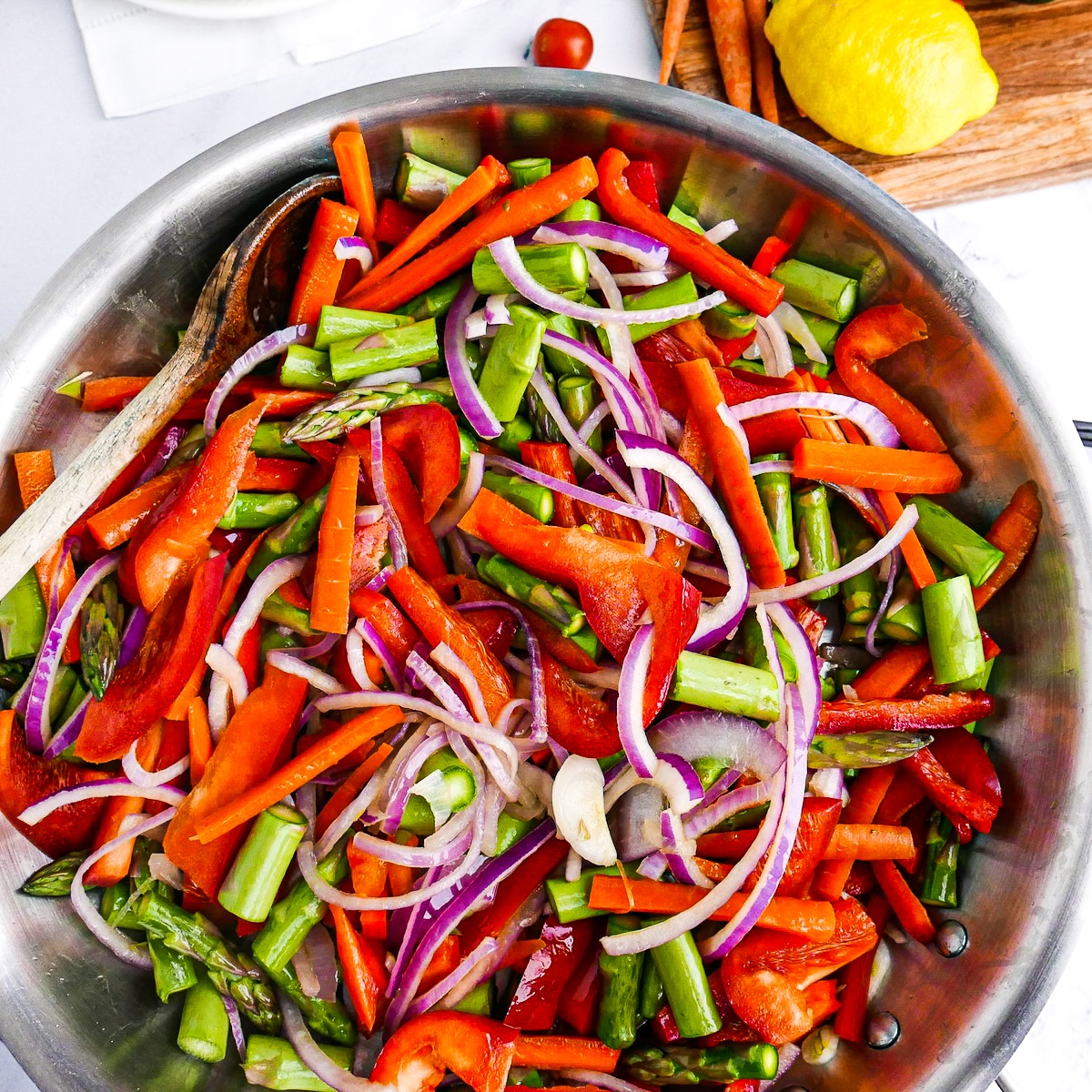
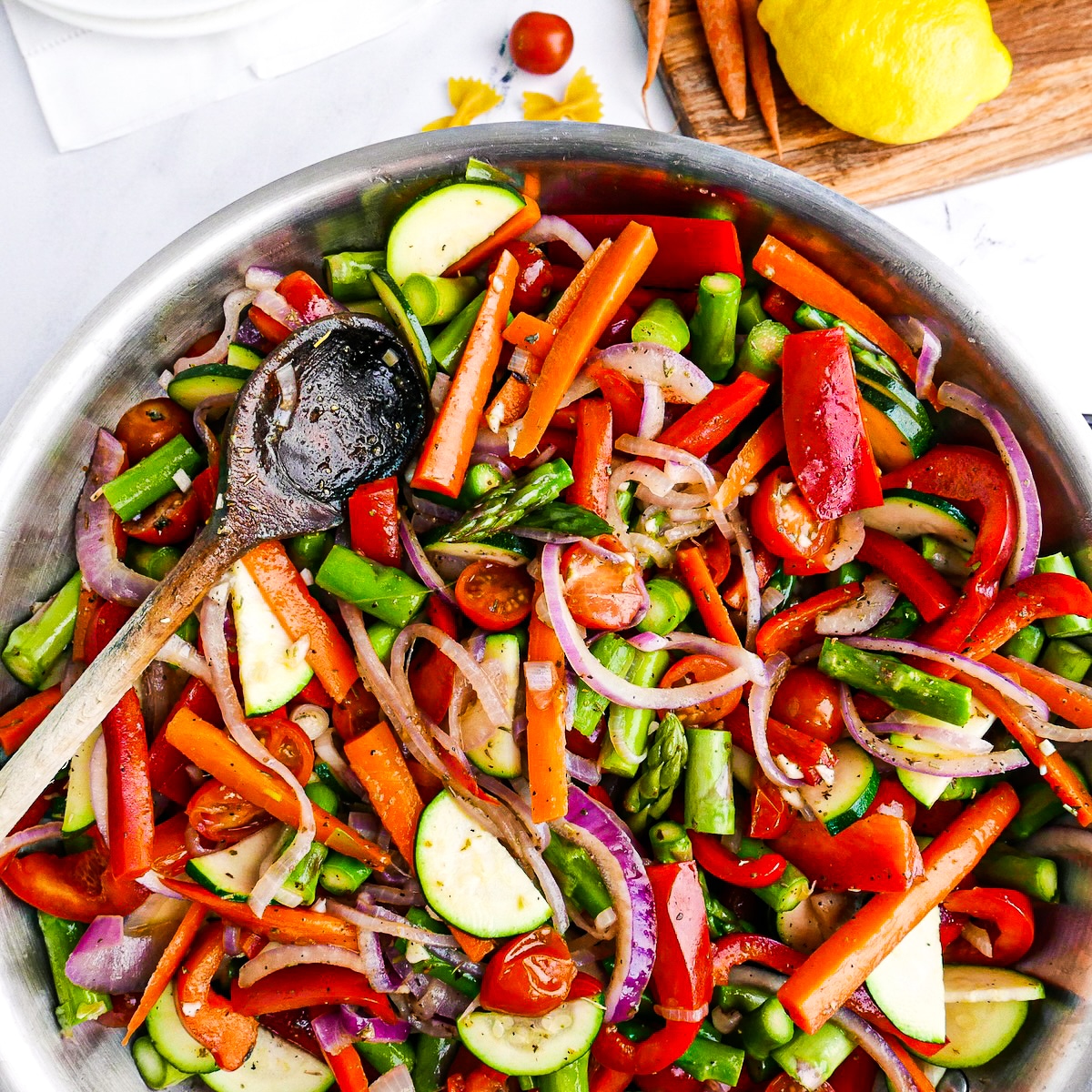
Meanwhile, heat the oil in a large non-stick skillet over medium heat. Add the onion, carrot, bell pepper, and asparagus, and cook for 3 to 4 minutes.
Next, add the zucchini and cherry tomatoes, and cook for another 2-3 minutes, until all of the vegetables are crisp-tender. Add garlic, Italian seasoning, salt, and pepper, and cook for an additional minute.
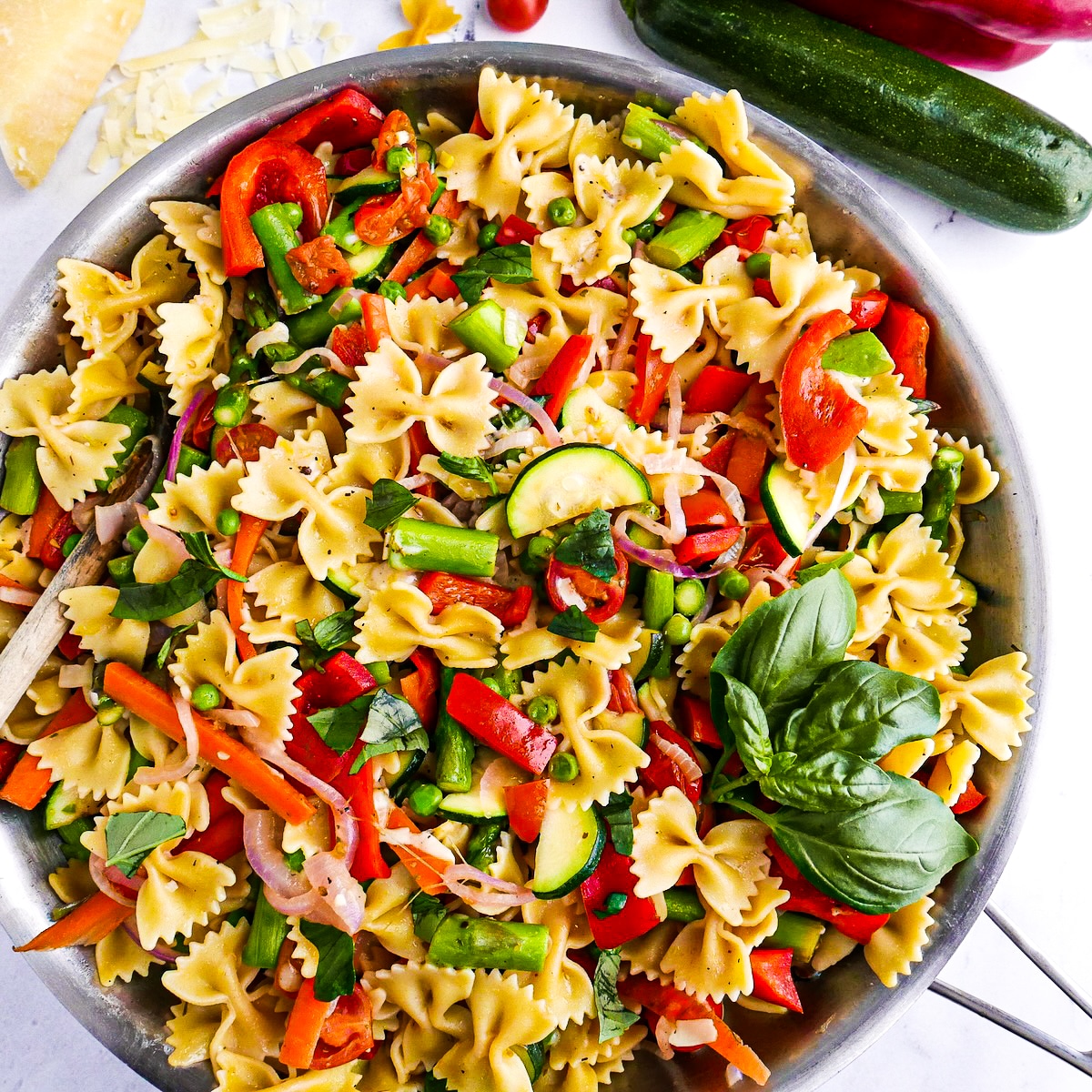
Add the cooked pasta, ¼ to ½ cup pasta water, peas, Parmesan cheese, lemon zest, and lemon juice, fresh basil, and toss to combine. Season to taste and serve immediately.
👩🏼🍳 Storage & Reheating
Store leftover vegetarian pasta primavera in an airtight container in the fridge for up to 4 days. Reheat it in a large skillet over medium-low heat. Add 1-2 tablespoons of water to help re-hydrate it, and stir occasionally for about 10 minutes, or until heated through.
I don't recommend freezing this pasta because the vegetables can become soft and watery after thawing.
👩🏼🍳 Expert Tips
- Cook the vegetables in stages. Start with firmer vegetables like carrots, bell pepper, and asparagus, then add softer vegetables like zucchini and tomatoes so everything stays tender-crisp.
- Cut vegetables evenly. Similar-sized pieces cook at the same rate and make the pasta easier to eat.
- Salt the pasta water generously. This seasons the pasta from the inside out and improves the final flavor.
- Cook pasta just until al dente. The pasta will soften a little more when tossed with the vegetables and sauce.
- Save the pasta water. The starchy water helps the Parmesan, lemon, and olive oil turn into a light sauce.
- Add basil at the end. Fresh basil loses flavor and color if it cooks too long.
- Taste before serving. Add more lemon juice for brightness, Parmesan for saltiness, or pasta water to loosen the sauce.
🍽 What to Serve with Pasta Primavera
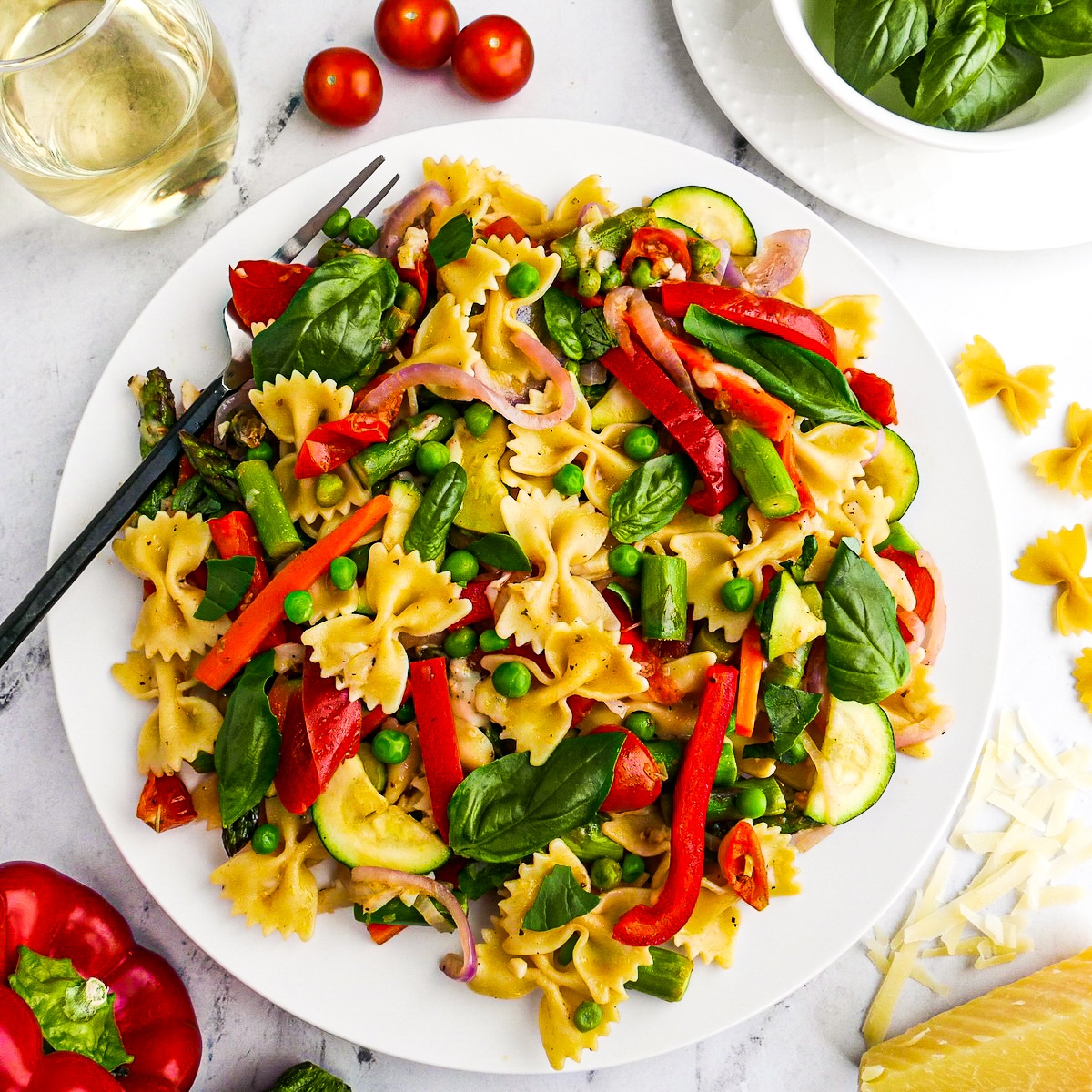
Pasta primavera is filling enough to serve as a vegetarian main dish, but it also pairs well with simple sides. Try it with:
- A crisp salad, like my cucumber apple salad
- Garlic bread or focaccia for soaking up the light lemon-Parmesan sauce
- Vegetarian protein, like chickpeas, tofu, or white beans
FAQS
Pasta primavera is an Italian-American pasta dish made with pasta and fresh vegetables. Many versions include cream, but this lighter version uses olive oil, Parmesan, lemon, basil, and pasta water instead.
Yes - frozen peas work especially well. Other frozen vegetables can be used, but add them near the end and avoid overcooking so they don't become mushy.
For vegetarian protein, add chickpeas, white beans, tofu, or toasted nuts. If you eat seafood or meat, shrimp or chicken also pair well.
Yes! This recipe uses starchy pasta water, Parmesan cheese, olive oil, lemon juice and lemon zest to create a light sauce without heavy cream.
Asparagus, peas, carrots, zucchini, bell peppers, cherry tomatoes, broccoli, mushrooms, and spinach all work well. For the best texture, add firmer vegetables first, and softer vegetables near the end.
🍝 More Vegetarian Pasta Recipes
Tried this recipe? Please leave a star ⭐️⭐️⭐️⭐️⭐️ rating below and/or a review in the comments section further down the page. You can also stay in touch with me through social media by following me on Instagram, Pinterest, TikTok, and Facebook.
Subscribe to my email newsletter to get a FREE e-book of 15 Healthy Weeknight Recipes, and get new recipes delivered to your inbox every week!
Pasta Primavera Recipe
Ingredients
- 12 ounces bow tie pasta (or any short pasta noodles)
- ¼ cup extra-virgin olive oil
- ½ red onion, thinly sliced into half moons
- 1 large carrot, cut into thin strips
- 1 red bell pepper, cut into thin strips
- 1 bunch of asparagus, chopped into 1-inch pieces
- 1 zucchini, thinly sliced into half moons
- 1 cup cherry tomatoes, halved
- 4 garlic cloves, sliced
- 1 teaspoon dried Italian seasoning
- 1 teaspoon sea salt
- ½ teaspoon black pepper
- ½ cup frozen peas, thawed
- ¾ cup Parmesan cheese, grated
- 1 lemon, zested and juiced
- 1 cup fresh basil leaves, chopped
Instructions
- Over high heat, bring a large pot of water to a boil, and add a large pinch of salt. Cook pasta according to (al dente) package instructions. After pasta is cooked, set aside ½ cup of pasta water and drain the pasta.
- Meanwhile, heat the oil in a large non-stick skillet over medium heat. Add the onion, carrot, bell pepper, and asparagus, and cook for 3 to 4 minutes.
- Next, add the zucchini and cherry tomatoes, and cook for another 2-3 minutes, until all of the vegetables are crisp-tender. Add garlic, Italian seasoning, salt, and pepper, and cook for an additional minute.
- Add the cooked pasta, ¼ to ½ cup pasta water, peas, Parmesan cheese, lemon zest, and lemon juice, fresh basil, and toss to combine. Season to taste and serve immediately.
Video
Notes
- Storage & Reheating: Store leftover vegetarian pasta primavera in an airtight container in the fridge for up to 4 days. Reheat it in a large skillet over medium-low heat. Add 1-2 tablespoons of water to help re-hydrate it, and stir occasionally for about 10 minutes, or until heated through.
- Cook pasta just until al dente. The pasta will soften a little more when tossed with the vegetables and sauce.
- Cook the vegetables in stages. Start with firmer vegetables like carrots, bell pepper, and asparagus, then add softer vegetables like zucchini and tomatoes so everything stays tender-crisp.

Leave a Reply